
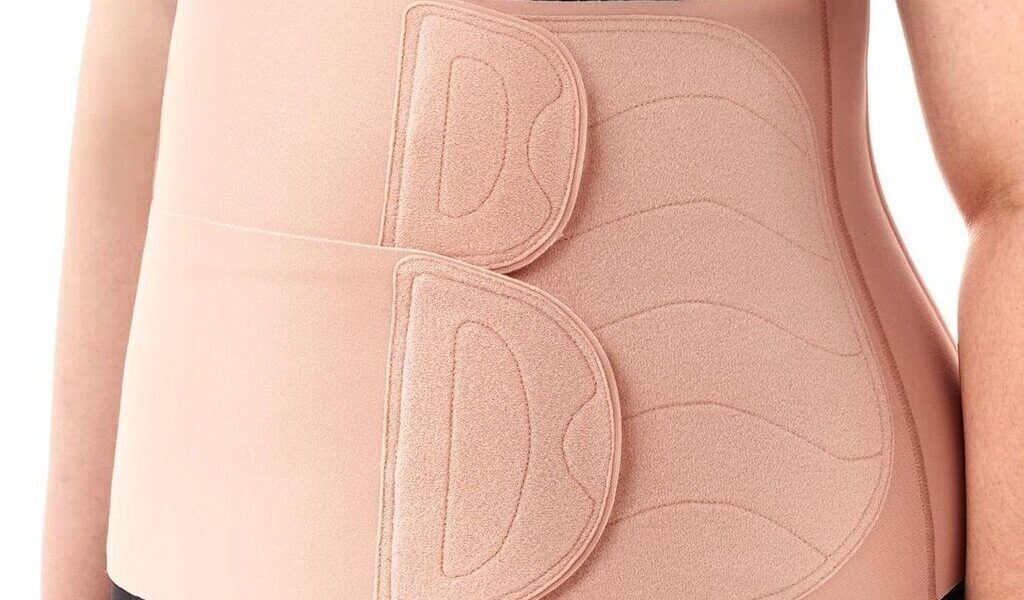

The process of recovering after a C-section is quite different from recovering after a vaginal birth. Abdominal surgery is required, and your body requires more time and reinforcement to recover. A belly band, also referred to as a postpartum wrap or abdominal binder, is one of the most popular postpartum aids that mothers resort to. However, how many days do you really need a belly band after a C-section, and when do you experience the need to quit using it?
Table of Contents
How Long Should You Wear a Belly Band Post-Surgery?
No universal and single timeline can be used for all women who have gone through C-sections, as the rates of healing vary. Nevertheless, the majority of doctors and recovery experts believe that a belly band may be helpful in the first few weeks of the recovery period.
Mostly, women start to use ba Belly Band 1 to 2 weeks after childbirth birth and only after the initial incision tenderness subsides and the doctor allows it. It is recommended that some women begin a little earlier in the hospital using a light, medically given bandage, and some may wait until they are at home.
During the entire term, the average mother wears a postpartum belly band for an average period of 6 to 10 weeks after CC-section. This is a time that is usually within your first three months when of abdominal muscles are weak, and your core is regaining strength. When you are 8 to 12 weeks postpartum, your body should have become stable enough so that you can start to taper off.
A normal day wears on average, is between 4 to 8 hours. Wearing a belly band 24/7 and particularly sleeping in it is not advised unless it is specifically recommended by a healthcare worker.
Factors Affecting Belly Band Usage Time
There are several personal and medical reasons that determine your wear length of a belly band following a C-section:
Healing of Your Incision
The state of your C-section scar is considered one of the most critical ones. In case your incision is healing with no infection or complication, you can start using a belly band earlier and move towards a more comfortable direction. When the healing process is prolonged, the use or wear time might have to be postponed.
Type of C-Section
A long-term use of support and a longer recovery period may be needed in case of an emergency C-section, multiple prior C-sections, or complications arising during surgery.
Your Activity Level
When you are on your feet a lot, walking, looking after older children, and having to carry your baby around, a belly band will perhaps offer some extra support over a more extended duration. Females on bed rest or less active can not require as many weeks of it.
Strength and Stability of the Muscle
The strength of your abdominal and pelvic floor, pre-pregnancy and post-pregnancy, is an issue as well. Persons who experience a large diastasis of the recti (ab separation) or have weak core muscles can use a band a little longer, and with mild rehabilitation exercises.
Medical Guidance
This is why you must have in mind the advice of your doctor or midwife as a top priority. They are able to examine your recovery and provide specialized advice on the time you should begin to wear and discontinue using a belly band.
The Benefits of Wearing a Belly Band After a C-Section
The use of a belly band after a C-section is not only about appearance, but it may have real functional and physical advantages in the recovery period.
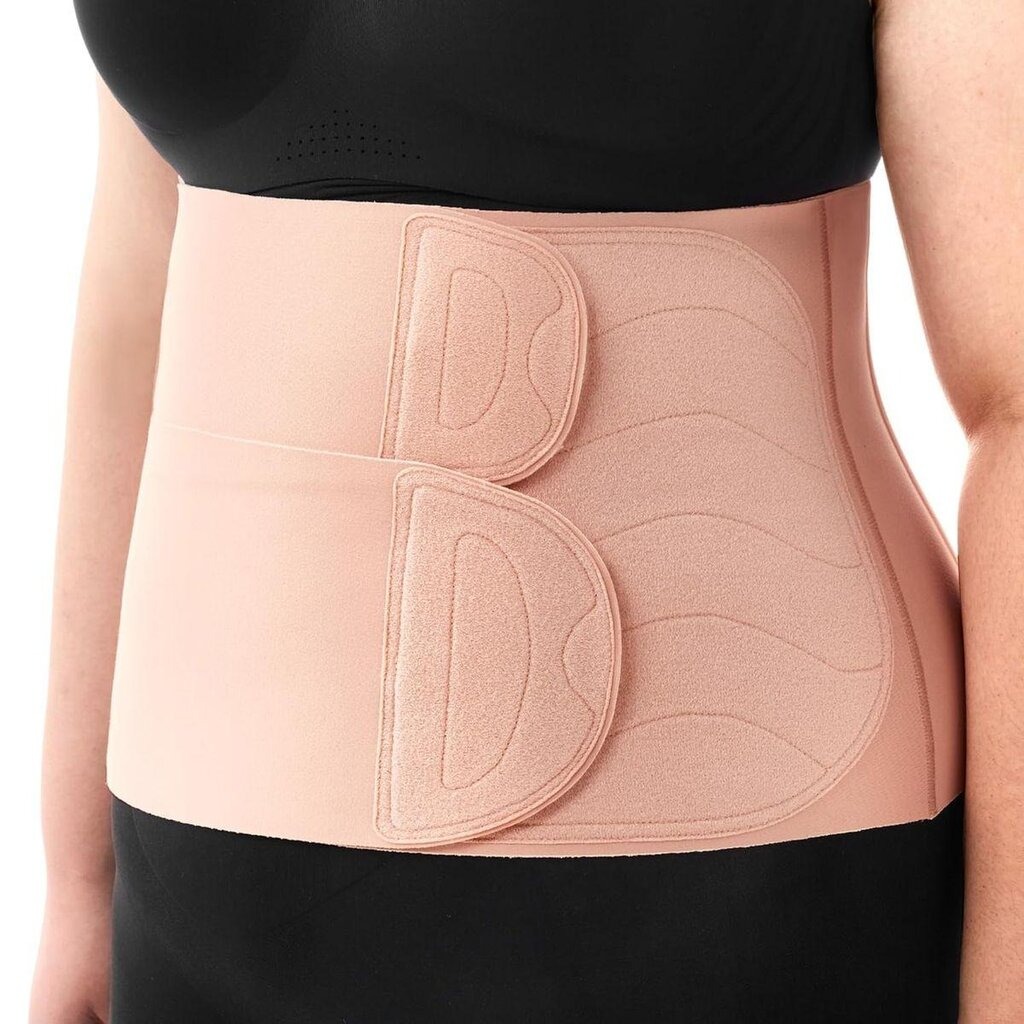
The Momcozy Ergowrap Postpartum Belly Band is one of the high-quality products that are specifically aimed at providing postpartum support. This kind of wrap is created to lift the abdomen, back, and waist but is also comfortable to wear on a daily basis.
The following are the key advantages of the use of a belly band following a C-section:
Provides abdominal support
The muscles of your stomach have been pulled after a C-section and surgically cut. A belly band provides mild compression that helps weakened muscles and lessens the pulling feeling about the incision.
Reduces pain and discomfort
A lot of women complain less of the discomfort on standing up, walking, coughing, or laughing with a belly band during the initial weeks.
Improves posture
When the patient is in the postpartum period, it is normal to hunch forward as a result of pain or weakness. A belly band will promote better posture, which can help to alleviate back, hip and shoulder pains.
Makes movement easier
As you add more stability to your core, your day-to-day activities like getting out of bed, walking or even carrying your baby can become easier and safer.
Promotes slow uterine contraction.
Although a belly band is not a weight loss aid, some light compression can be used to assist the uterus during contraction and back to its pre-pregnancy size (the process of involution is a normal occurrence).
When to Stop Wearing Your Postpartum Belly Band
A belly band may be extremely useful, but it is not designed to be an eternal part of a person. The time to start reducing should be at 8 to 12 weeks, depending on your recovery.
You can be willing to wear your belly band no longer when:
- Your cut is completely healed, and the tenderness of it is less painful.
- Your back and the middle are stronger.
- You are able to move, lift and carry your baby without any support.
- You are now doing soft-core and pelvic floor exercises.
- It does not have a visible payoff to you anymore.
One should also not get addicted to a belly band. Putting it on too long or too tight will cause the muscles to strengthen too slowly, and the overall ability of the body to stabilize itself.
Listen to your body. When you experience pain, difficulty breathing, or pain in your scar, or stomach pain during the wearing of the band, it is an indication to relax it or take a break.
Tips for Choosing the Right C-Section Recovery Band
Belly bands do not necessarily look like that. The difference between your comfort and recovery can be great in terms of selecting the right one.
Look for a band that is:
- Regulable, therefore, to give the compression strength you prefer.
- Constructed using breathable and wearable fabric.
- Broad enough to encompass the lower abdomen and back.
- Helping and yet not too strict.
- Lightweight and simple to wear and doff.
The ultimate choice is the Momcozy Ergowrap Postpartum Belly Band, which is an excellent choice since it is fully adjustable in compressing, flexing to support, and being designed to fit your body as it evolves after childbirth. This assists in ensuring that there is cohesive support, which is witnessed in the initial recovery level to the subsequent healing stages.
Final Thoughts
Keep in mind: a belly band is an aid material and should not replace proper rest, nutrition, hydration, and light movement. Add to it an exercise regimen that is healthy and allows your body the time and attention it needs to restore its full health after birth.